
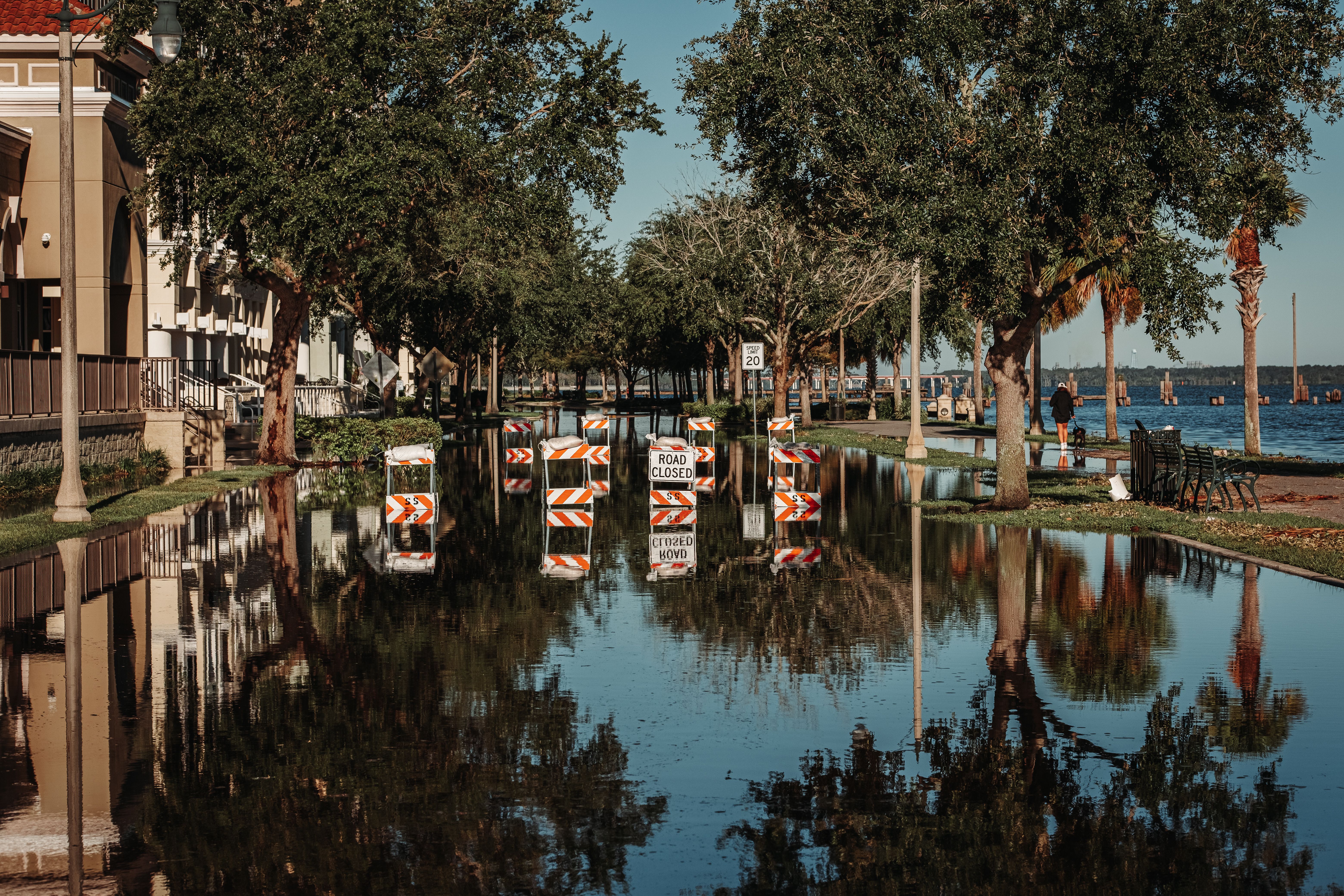
Quick answer: Miami's highest flood exposure is generally concentrated in low-lying coastal, waterfront, and reclaimed areas, including Miami Beach, Brickell, Edgewater, parts of Downtown Miami, and neighborhoods along the Miami River and Biscayne Bay. Areas located farther inland or along higher portions of the Atlantic Coastal Ridge, including parts of Coral Gables, Pinecrest, and South Miami, generally have lower coastal flood exposure. However, no Miami neighborhood is completely flood-proof. The exact property's elevation, FEMA flood zone, drainage conditions, proximity to water, building characteristics, and insurance costs matter more than a neighborhood label alone.
If you're buying a home or condo in South Florida, flood risk should be part of your property evaluation from the beginning—not something you investigate after you've already fallen in love with a listing.
Miami Flood Risk by Neighborhood: At a Glance
| Miami area | General flood exposure | Main concern | What buyers should check |
|---|---|---|---|
| Miami Beach | High | Storm surge, tidal flooding, sea-level rise | FEMA zone, elevation, flood insurance |
| Brickell | High | Coastal + rainfall/compound flooding | Elevation, drainage, insurance |
| Edgewater | High | Biscayne Bay exposure, storm surge | Flood zone, elevation |
| Downtown Miami | Moderate to high | River, bay and rainfall flooding | Flood zone, drainage, elevation |
| Upper Eastside | Moderate to high | Coastal and rainfall flooding | Property elevation, flood zone |
| Wynwood | Moderate to high | Heavy rainfall and drainage | Flood zone, drainage |
| Little Havana | Moderate | Rainfall/drainage flooding | Elevation and local drainage |
| Coral Gables | Generally lower coastal exposure | Localized rainfall flooding | Exact property elevation |
| Pinecrest | Generally lower coastal exposure | Heavy rainfall/drainage | Flood zone, drainage |
| South Miami | Generally lower coastal exposure | Localized flooding | Property-specific flood data |
| Doral | Generally lower coastal exposure | Heavy rainfall/drainage | Drainage and elevation |
| Kendall | Generally lower coastal exposure | Rainfall and drainage | Exact location and elevation |
Important: "Lower exposure" does not mean "no flood risk." Miami-Dade's flat terrain, drainage systems, canals, porous limestone and intense rainfall mean that localized flooding can occur even outside FEMA's highest-risk flood zones.
Why Elevation Matters So Much in Miami
Miami-Dade's geography is unusually important when evaluating flood risk.
The Atlantic Coastal Ridge runs through central Miami-Dade and contains some of the area's higher natural elevations. Historically, this higher ground influenced where transportation infrastructure and development were concentrated.
Much of the surrounding area, however, is extremely flat and only a few feet above sea level. Some neighborhoods were also developed on land that was historically wetland or was substantially modified or filled.
That creates an important distinction for real estate buyers:
Distance from the ocean is not enough to determine flood risk.
A property farther inland can still experience flooding from intense rainfall or drainage limitations, while a property in a coastal neighborhood may have substantially different exposure depending on its elevation, building design and relationship to surrounding water.
That's why two properties within the same Miami neighborhood can have very different flood-risk profiles.
Which Miami Neighborhoods Have the Highest Flood Exposure?
Miami Beach
Miami Beach is among the most obvious high-exposure areas in South Florida because much of the city occupies a barrier island between the Atlantic Ocean and Biscayne Bay.
The area faces multiple forms of water-related risk, including:
Storm surge
Tidal flooding
Heavy rainfall
Sea-level rise
Drainage challenges
Miami Beach has invested heavily in stormwater infrastructure, pumps, raised roads and other resilience projects. Those improvements can reduce the impact of flooding, but they do not eliminate the underlying geographic exposure.
For buyers: Don't evaluate a Miami Beach property solely by its neighborhood. Check its FEMA flood zone, elevation, building characteristics, flood insurance requirements and historical flooding information.
Brickell
Brickell is one of Miami's most important examples of why urban flood risk is more complicated than simply being "near the ocean."
The neighborhood sits close to Biscayne Bay and the Miami River and contains extensive high-density development. During major storms, intense rainfall can interact with elevated tides, storm surge and constrained drainage.
This is sometimes referred to as compound flooding: multiple sources of water contribute to flooding at the same time.
For condo buyers, the analysis should go beyond the individual unit. Buyers should also investigate:
Building elevation
FEMA flood zone
Garage elevation
Ground-floor equipment
Flood protection systems
Building insurance
HOA or condo association financials
Flood-related assessments
Individual unit flood insurance requirements
A high-rise condo may have a very different risk profile from a single-family home in the same general area.
Edgewater and the Upper Eastside
Edgewater and parts of the Upper Eastside sit close to Biscayne Bay, making proximity to water an important consideration.
Properties here can face combinations of:
Storm surge
Tidal flooding
Heavy rainfall
Sea-level-rise exposure
Drainage-related flooding
The neighborhood label itself isn't enough to determine whether a particular property is high or low risk.
For buyers comparing condos in these areas, elevation and building-specific information can be more useful than simply knowing that the property is in Edgewater or the Upper Eastside.
Downtown Miami, Omni and the Miami River
Downtown Miami and areas surrounding the Miami River combine dense development with proximity to waterways.
One concern is compound flooding, where heavy rainfall occurs while tides, storm surge or elevated water levels limit how efficiently water can drain.
This is particularly important for buyers of properties near:
The Miami River
Biscayne Bay
Low-lying roads
Canal systems
Areas with significant paved surfaces
For a specific property, investigate both its mapped flood zone and its actual elevation rather than assuming every part of Downtown has the same exposure.
Wynwood, Little Havana and Allapattah
Neighborhoods farther from the immediate waterfront can still experience flooding.
Here, the issue may be less about direct storm surge and more about intense rainfall, drainage capacity, surface runoff and localized low points.
This distinction matters because moving inland does not automatically eliminate flood risk.
For buyers, the relevant question isn't simply:
"Is this neighborhood away from the ocean?"
It is:
"How does this specific property perform when Miami receives extreme rainfall?"
Which Miami Neighborhoods Have Lower Flood Exposure?
Coral Gables
Coral Gables contains substantial areas on or near the higher portions of the Atlantic Coastal Ridge, giving many parts of the city lower coastal flood exposure than low-lying waterfront locations.
But "lower" should not be interpreted as "safe from flooding."
Coral Gables also contains canals, waterways and areas where local drainage conditions can vary.
A buyer should still check:
FEMA flood zone
Property elevation
Finished-floor elevation where available
Drainage
Distance from canals and waterways
Flood insurance requirements
The same principle applies throughout Miami-Dade: a neighborhood's overall reputation cannot replace property-level research.
Pinecrest
Pinecrest is another community that benefits from generally higher natural elevation compared with many low-lying coastal areas.
Its inland location also reduces direct exposure to Atlantic storm surge.
However, heavy rainfall can still create localized flooding, so buyers should not assume that an inland address automatically has negligible flood exposure.
For single-family homes especially, drainage, lot elevation and the property's relationship to surrounding streets can make a meaningful difference.
South Miami
South Miami is another inland community where portions of the area sit on relatively higher ground.
Compared with barrier-island and waterfront neighborhoods, direct coastal exposure is generally lower.
But again, flood risk is property-specific.
A buyer should still review the exact FEMA designation and available elevation information before making a purchase decision.
Doral
Doral is substantially farther inland than Miami Beach and many waterfront Miami neighborhoods, so direct coastal storm-surge exposure is generally lower.
However, the area can still experience flooding associated with intense rainfall and drainage.
This illustrates an important point for South Florida buyers:
Inland does not mean flood-proof.
Kendall and Other Inland Areas
Many parts of Kendall are farther from the coast and have lower direct storm-surge exposure than Miami's barrier islands and waterfront districts.
But the area's relatively flat terrain means rainfall and drainage remain relevant.
For buyers, the exact address should still be checked against FEMA maps and other available flood and elevation information.
The Most Important Point: Flood Risk Is Property-Specific
Neighborhood rankings are useful for narrowing down where you want to live.
They are not enough to determine whether a specific home is a good purchase.
Consider two homes on the same street.
One could have:
Higher finished-floor elevation
Better drainage
A different FEMA flood designation
Raised mechanical equipment
Different construction characteristics
Lower insurance costs
The other could have a materially different risk profile.
This is why buyers should evaluate the property, not just the neighborhood.
For Rility users, that distinction is particularly important. A neighborhood search can tell you where to start. The next step is comparing the individual properties you're actually considering.
How to Check Flood Risk Before Buying a Miami Property
1. Check the FEMA Flood Zone
Start with the exact property address using FEMA's official flood mapping resources.
Do not rely on a neighborhood-level assumption.
Flood-zone boundaries can change over relatively short distances, particularly around waterways and areas with different elevations.
2. Check the Property's Elevation
A flood zone is useful, but it isn't the entire story.
Look for available information about:
Ground elevation
Finished-floor elevation
Lowest adjacent grade
Elevation certificates
Building elevation
Garage elevation
Elevation can help explain why two nearby properties can face different levels of flood exposure.
3. Look Beyond FEMA Maps
FEMA maps are important for understanding mapped flood hazard, but buyers should also consider:
Historical flooding
Stormwater drainage
Tidal flooding
Storm surge
Sea-level-rise projections
Nearby canals and waterways
Street elevation
Local infrastructure
A property outside a high-risk FEMA zone can still experience flooding.
4. Look at Future Sea-Level Rise
A 30-year mortgage can extend well beyond the timeframe buyers typically consider when looking at today's flood maps.
NOAA's Sea Level Rise Viewer provides a way to visualize potential future water-level impacts.
This doesn't mean a property's future outcome can be predicted precisely. Rather, it gives buyers another layer of information when considering long-term ownership.
5. Get a Real Insurance Quote
Flood exposure and insurance costs are increasingly important components of the total cost of owning a South Florida property.
Don't assume:
"It's outside a high-risk flood zone, so flood insurance will be cheap."
Insurance pricing can depend on numerous property-specific factors.
Before closing, buyers should obtain actual insurance quotes for the property they're considering.
Does Living Outside a FEMA Flood Zone Mean You're Safe From Flooding?
No.
FEMA flood zones are important, but they should not be treated as a simple safe-versus-unsafe system.
Flooding can occur outside areas designated as higher-risk flood zones because of:
Extreme rainfall
Poor drainage
Local topography
Stormwater system limitations
Canal overflow
Tidal conditions
Storm surge
Changing weather patterns
This is particularly important in South Florida, where elevation differences can be relatively small.
For buyers, the better question is:
"What is this property's overall flood exposure and what would it cost me to manage that risk?"
Does Flood Risk Affect the Cost of a Miami Home?
It can.
Flood exposure can affect a property's total cost of ownership through several channels:
Flood insurance
Homeowners insurance
Deductibles
Required coverage
Building improvements
Maintenance
Potential mitigation work
Financing considerations
Resale considerations
For condos, buyers should also look at the building's financial position, including insurance costs, reserves and assessments.
A property that appears inexpensive based on its purchase price can become substantially more expensive once insurance, taxes, HOA costs and potential assessments are included.
That's why comparing the total cost of ownership, rather than just listing prices, is critical when shopping for Miami real estate.
Miami Flood Risk vs. Wind Risk: They're Not the Same Thing
Buyers sometimes group flood and hurricane risk together, but they are different exposures.
A property can have:
High wind exposure but relatively lower flood exposure
High flood exposure but different wind characteristics
Both
Neither at the same level
Mitigation strategies and insurance coverage can also differ.
For example, wind mitigation features may help reduce certain wind-related insurance costs, while flood insurance addresses a different category of risk.
If you're evaluating a South Florida property, consider both independently.
How Rility Can Help You Compare Miami Properties
Flood risk is one piece of the larger home-buying equation.
When comparing properties, buyers should consider the combination of:
Purchase price + property taxes + HOA/condo fees + homeowners insurance + flood insurance + financing + maintenance + potential assessments.
That's where a property search platform can become more useful than a traditional listing search.
Instead of asking only:
"Which Miami neighborhood should I live in?"
buyers can ask:
"Which specific property gives me the best combination of location, price, flood exposure and total monthly cost?"
Browse Miami and South Florida listings on Rility to compare current properties, or use the Rility mortgage calculator to estimate how financing, taxes and other ownership costs affect your monthly budget.
For more context on insurance, see Can You Get Flood Insurance Outside a Flood Zone?
Frequently Asked Questions About Miami Flood Risk
Which Miami neighborhoods have the highest flood risk?
Miami Beach and other low-lying waterfront areas generally have some of the highest flood exposure because of their proximity to the Atlantic Ocean, Biscayne Bay and other waterways. Brickell, Edgewater, Downtown Miami and parts of the Upper Eastside can also face significant coastal, rainfall and compound-flooding exposure.
However, risk varies considerably by property.
What is the safest Miami neighborhood from flooding?
There is no single "safest" Miami neighborhood because flood risk depends on the type of flooding being considered and the exact property.
Parts of Coral Gables, Pinecrest and South Miami generally benefit from higher elevation and lower direct coastal exposure, but localized rainfall flooding can still occur.
Is Brickell at high risk of flooding?
Brickell has meaningful flood exposure because of its proximity to Biscayne Bay and the Miami River and its susceptibility to heavy rainfall and compound-flooding conditions.
However, risk can vary significantly between individual buildings and properties.
Is Miami Beach in a flood zone?
Many Miami Beach properties are located in FEMA-designated flood hazard areas, but the exact designation varies by address.
Buyers should check the specific property rather than assuming the entire city has one flood-zone designation.
Can a house outside a FEMA flood zone still flood?
Yes.
FEMA maps identify mapped flood hazards, but properties outside higher-risk zones can still flood because of heavy rainfall, drainage limitations, stormwater runoff, tidal conditions and other factors.
How do I check a Miami home's flood zone?
Use the property's exact address with FEMA's Flood Map Service Center, then supplement the result with available elevation, drainage, historical flooding and insurance information.
Does flood risk affect Miami property insurance?
It can. Flood insurance is separate from standard homeowners coverage in many situations, and the cost can depend on property-specific characteristics and the level of exposure.
Buyers should obtain an actual insurance quote before committing to a property.
Should I avoid buying a home in a flood zone?
Not necessarily.
A higher-risk flood designation doesn't automatically make a property a bad investment or a poor place to live. The important question is whether the property's price, elevation, insurance costs, building characteristics and long-term risk make sense for your budget and goals.
The Bottom Line
Miami flood risk cannot be judged by neighborhood name alone.
Waterfront and low-lying areas such as Miami Beach, Brickell and Edgewater generally face greater coastal and storm-related exposure, while higher portions of the Atlantic Coastal Ridge, including parts of Coral Gables, Pinecrest and South Miami, generally have lower coastal exposure.
But the most important number isn't the neighborhood's average elevation.
It's the specific property's flood zone, elevation, drainage conditions, insurance cost and overall exposure.
Before buying in Miami, don't stop at the listing price. Check the flood risk, insurance, taxes, HOA costs and financing together to understand what the property will really cost you.
That's the level of property comparison Rility is built to help you make.
Rility provides information for general educational purposes only and does not provide legal, financial, tax, insurance, mortgage, investment, or other professional advice. Market data, property information, estimates, calculators, and other information may change or contain errors and should be independently verified. Property and investment decisions involve risk. Consult qualified professionals before making decisions based on information provided by Rility.
See our full disclaimer