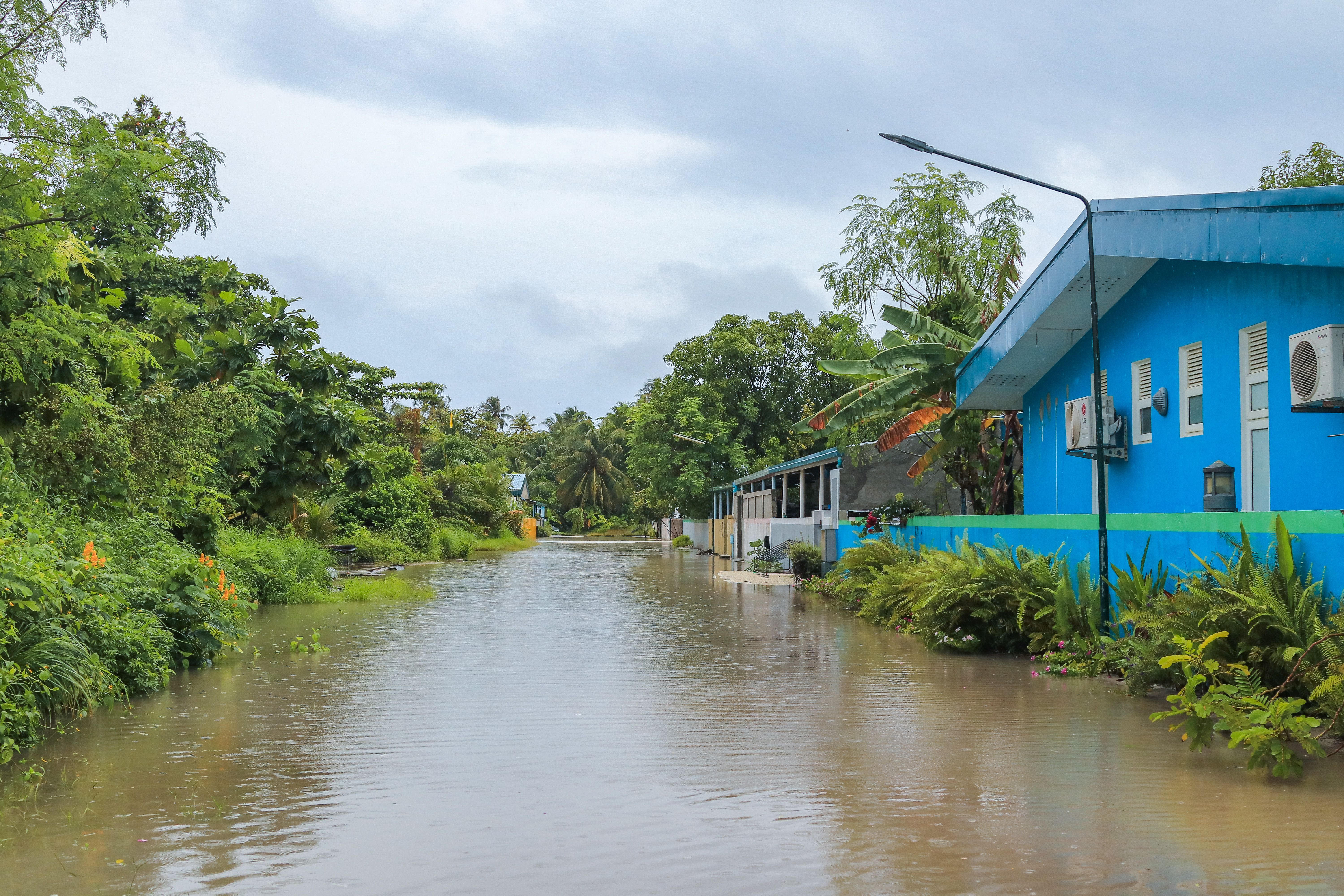
Quick answer: Yes, it's worth considering. Every property is technically in a FEMA flood zone — "not in a flood zone" usually just means you're outside a lender-required high-risk zone. Nationally, roughly 25–30% of flood insurance claims come from these lower-risk zones, and Miami's flat terrain, porous limestone geology, and heavy rain events mean flooding isn't confined to the areas FEMA maps as highest-risk. Flood damage is never covered by a standard homeowners policy, so the decision to carry it is separate from whether your lender requires it.
"I'm not in a flood zone" is one of the most common things Miami buyers say — and it's almost never quite true. Every piece of property in the country falls into some FEMA flood zone designation. What people usually mean is that they're not in a Special Flood Hazard Area, the high-risk zones where a federally backed mortgage legally requires flood insurance. That's a real distinction, but it's a lending rule, not a safety guarantee.
What Your Flood Zone Actually Tells You
FEMA flood maps sort properties into risk categories based on historical data and modeling:
- High-risk zones (A, AE, AH, AO, V, VE, and similar designations): These fall within the 100-year floodplain, meaning a 1% annual chance of flooding. If you have a federally backed mortgage, flood insurance is legally required here.
- Zone X (shaded and unshaded): These areas sit outside the 100-year floodplain, with moderate to minimal mapped risk. Flood insurance generally isn't required for mortgage purposes, though many Miami homeowners carry it anyway.
The maps most of South Florida is working from date back to 2009, and while FEMA has been working on updates, that means the zone lines on file don't always reflect current drainage infrastructure or the more granular, address-level risk assessment used elsewhere in the process.
Why "Outside the Zone" Doesn't Mean "Won't Flood"
Miami's flood risk isn't driven only by storm surge and hurricane-category rainfall — the kind of events FEMA's zone maps are built around. It's also driven by:
- Flat, low-lying terrain with limited natural drainage
- Porous limestone bedrock, which lets water rise from below during heavy rain, not just from the coast inward
- Intense, localized rain events that can overwhelm street drainage regardless of a property's official flood zone
That combination is a big part of why roughly a quarter of all National Flood Insurance Program claims nationally come from outside officially designated high-risk zones. In a market like Miami-Dade, where more than a third of homes face some degree of elevated flood risk according to recent flood-zone analyses, that statistic isn't an abstraction — it's a real gap between what a map says and what a heavy afternoon storm can do to a ground-floor unit.
When You're Legally Required to Have It
Flood insurance isn't just about high-risk zone maps. You'll also need it if:
- You have a federally backed mortgage on a property in a Special Flood Hazard Area
- You purchased with federal disaster assistance, such as an SBA disaster loan or FEMA Individual Assistance grant — this requirement is permanent and transfers to future owners if you sell
- Your property has previously received an NFIP claim payout, in which case continuous coverage is required going forward
- You hold a Citizens Property Insurance policy with a dwelling replacement cost above a certain threshold — as of 2026, that threshold is $400,000, phasing down toward all Citizens policyholders by 2027
Lenders can also require flood insurance on their own judgment even for a property FEMA maps as lower-risk, so it's worth confirming directly with your lender rather than assuming your zone designation settles the question. For more on how flood requirements interact with your broader homeowners coverage, see our comparison of Citizens Property Insurance and private carriers.
What It Actually Costs
Flood insurance premiums in Miami vary substantially by zone, elevation, and coverage amount:
- Zone X (lower risk): typically $400–$1,200 a year
- High-risk zones (AE, VE, and similar): typically $2,000–$6,000 a year for most homes, depending on elevation and construction
Miami-Dade County residents get one meaningful advantage here: unincorporated Miami-Dade holds a strong rating in FEMA's Community Rating System, one of relatively few communities nationwide at that level, which translates into a substantial discount — currently around 35% — on National Flood Insurance Program premiums for both in-zone and out-of-zone policies. Elevation certificates can also meaningfully reduce your rate if your home sits above base flood elevation, so it's worth getting one even for a property outside a mandatory zone.
How to Decide If You Need It
Pull your actual flood zone determination, not just a general sense of your neighborhood's reputation, using FEMA's Flood Map Service Center. Zone designations can vary block by block, especially near canals, low-lying pockets, or areas close to but not directly on the water.
Weigh the cost against your risk tolerance, not just the legal requirement. At $400–$1,200 a year in a lower-risk zone, flood coverage is often inexpensive relative to the cost of a single flooded ground floor — a bet many Miami homeowners decide is worth making even when it's optional.
Look at the specific neighborhood, not just the city-wide statistic. Flood exposure varies significantly across Miami-Dade based on elevation, drainage investment, and proximity to canals and the coast.
Remember your standard homeowners policy won't help. Flood damage — whether from storm surge, heavy rain, or rising groundwater — is excluded from standard homeowners and Citizens policies alike. It's always a separate purchase, regardless of where you land on zone risk.
For how flood coverage fits into the bigger picture of what South Florida homeowners are paying overall, our pillar guide on South Florida homeowners insurance in 2026 covers the full landscape.
Curious how flood coverage affects your total monthly payment? Run the numbers with our mortgage calculator, or browse current Miami listings on Rility to compare properties with flood risk in mind from the start.
Frequently Asked Questions
Is flood insurance required if I'm not in a high-risk flood zone? Not usually for mortgage purposes, but it can still be required by your lender, or if your property has a history of federal disaster assistance or an NFIP claim payout. It's always worth carrying even when it's optional, given how much flooding happens outside official high-risk zones.
What percentage of flood claims come from outside flood zones? Nationally, roughly 25–30% of NFIP flood claims come from properties outside officially designated high-risk zones, according to FEMA's own FloodSmart data.
Does homeowners insurance cover flood damage in Miami? No. Flood damage is excluded from standard homeowners insurance and from Citizens Property Insurance policies. Flood coverage always has to be purchased as a separate policy.
How much does flood insurance cost outside a high-risk zone in Miami? Typically $400–$1,200 a year in Zone X, compared to $2,000–$6,000 a year in high-risk zones, depending on elevation, construction, and coverage amount. Miami-Dade's Community Rating System discount can lower these costs further for eligible properties.
Rility provides information for general educational purposes only and does not provide legal, financial, tax, insurance, mortgage, investment, or other professional advice. Market data, property information, estimates, calculators, and other information may change or contain errors and should be independently verified. Property and investment decisions involve risk. Consult qualified professionals before making decisions based on information provided by Rility.
See our full disclaimer