
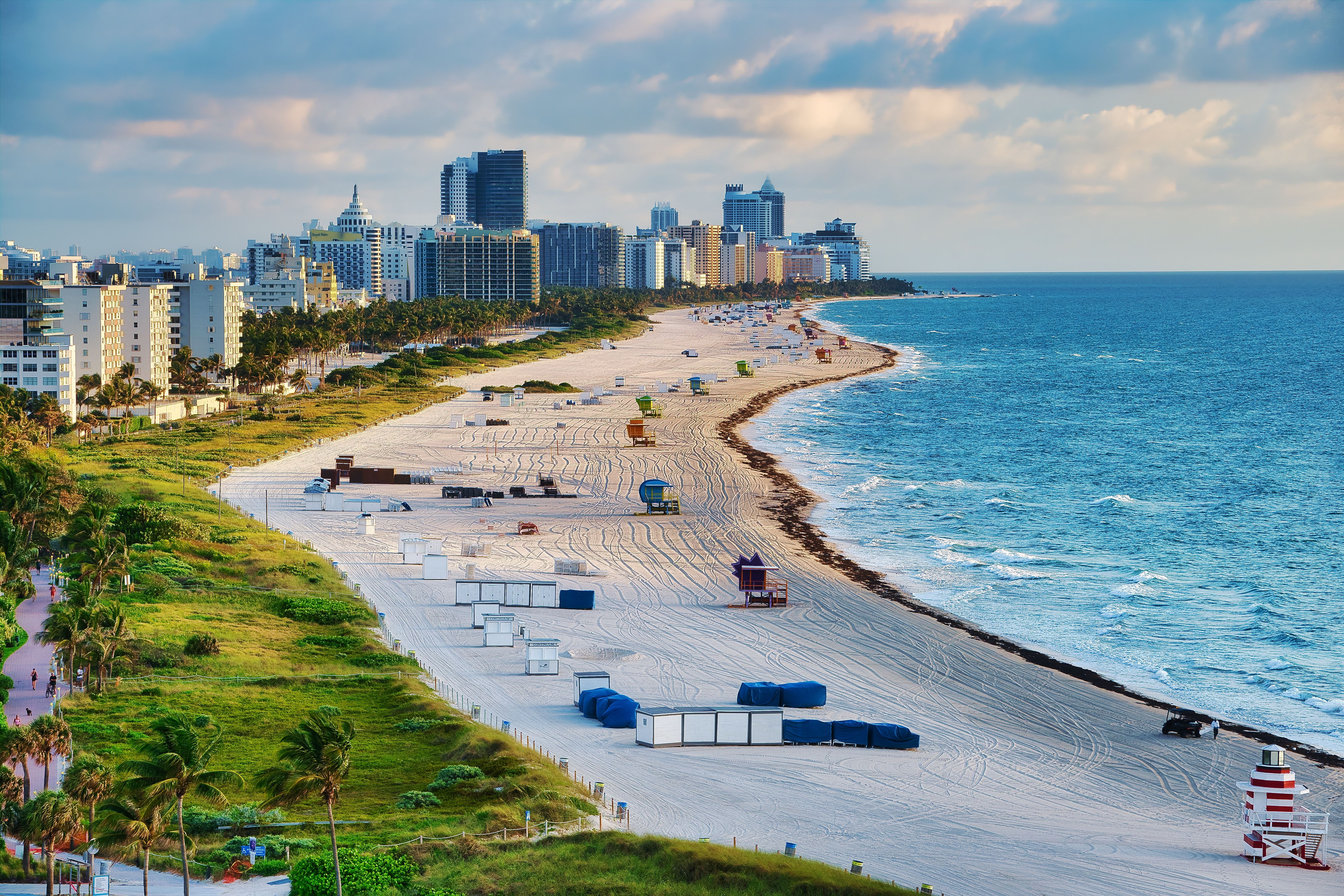
Quick answer: Choose Miami Beach for oceanfront living and nightlife, Brickell for a walkable commute to Miami's financial district, or Coconut Grove for a quieter, family-friendly neighborhood with more green space. Rent runs lowest in Coconut Grove and highest in Brickell; home-buying flips that pattern, with Brickell condos the more accessible entry point and Coconut Grove houses commanding seven-figure prices.
Miami isn't one city to live in — it's a handful of very different ones stitched together by causeways, a river, and a whole lot of traffic. Three names come up again and again when people are deciding where to plant themselves: Miami Beach, Brickell, and Coconut Grove. Ask a finance transplant, a beach-obsessed retiree, and a family with a dog and a stroller which one is "best," and you'll get three completely different answers — because they're built for three completely different lives.
Here's the honest breakdown, with current 2026 pricing.
Still deciding how to weigh these factors against each other? Our guide on how to compare Miami neighborhoods walks through the framework we use with clients before they narrow down a shortlist.
Quick Snapshot
| Miami Beach | Brickell | Coconut Grove | |
|---|---|---|---|
| Vibe | Beach town meets nightlife capital | Vertical financial district | Leafy village by the bay |
| Avg. 1BR rent | ~$2,800–$3,000 | ~$3,300–$3,400 | ~$2,200–$2,800 |
| Median home/condo price | ~$640,000 | ~$620,000–$660,000 | ~$1.5M–$2.6M (mostly houses) |
| Walk Score | Very high (South Beach) | 90+, "Walker's Paradise" | Moderate, car-helpful |
| Best for | Nightlife, tourists-turned-locals, beach lovers | Young professionals, bankers, high-rise renters | Families, retirees, nature lovers |
| Downtown commute | 20–35 min (bridge traffic) | Already there | 15–25 min |
Rent and price figures are current 2026 market averages and will vary by building, view, and season — but they're directionally accurate for comparing the three.
Miami Beach: For the Person Who Wants to Live on Vacation
Miami Beach is its own city, connected to the mainland by causeways, and it has always sold one thing better than anywhere else in Miami: the beach itself. South Beach, Mid-Beach, and North Beach each have a distinct personality — South Beach is Art Deco hotels, Ocean Drive tourists, and a nightlife scene that runs until sunrise; Mid-Beach is quieter, more residential, and increasingly popular with young professionals; North Beach still feels like old-school, low-rise Florida.
Who thrives here:
- People who genuinely want the beach as a daily part of life, not a weekend trip
- Anyone plugged into hospitality, nightlife, or the events industry
- Retirees and remote workers who don't need a downtown commute
- Renters who prioritize walkability to restaurants, gyms, and the sand over office proximity
The trade-offs:
- Getting to Brickell or Downtown for work means crossing a causeway — and at rush hour, that 4-mile drive can eat 30–40 minutes
- Tourism brings noise, crowded sidewalks, and seasonal price spikes (hurricane season aside, "season" here means winter snowbirds and spring break crowds)
- Flood risk and insurance costs are real considerations on a barrier island — the City of Miami Beach's resilience and flood-preparedness resources are worth reviewing before you buy
- It's not cheap: studios and one-bedrooms average roughly $1,900–$3,000/month depending on the sub-neighborhood, with waterfront and Art Deco district units pushing well past that
Brickell: For the Person Who Wants to Walk to Work
If Miami Beach is the vacation, Brickell is the career. It's Miami's financial district — often called the "Manhattan of the South" — and it has grown into one of the most vertical, walkable neighborhoods in the entire Southeast. Glass towers, private banks, Brickell City Centre's shops and restaurants, and a nonstop stream of happy hours make it feel like a downtown built specifically for people in their late 20s to early 40s who work hard and want their commute to be an elevator ride.
Who thrives here:
- Professionals in finance, law, tech, or consulting who work in or near the district
- People who want a true car-optional lifestyle — Brickell consistently scores 90+ on Walk Score, qualifying as a "Walker's Paradise"
- Renters and buyers who want new-construction high-rises with resort-style amenities (pools, gyms, co-working lounges)
- Investors: with a median condo price around $620,000–$660,000 and rents averaging roughly $4,000+/month for larger units, gross rental yields here are notably strong compared to most U.S. gateway cities
The trade-offs:
- It's dense and vertical — if you want a yard, a quiet street, or genuine green space, this isn't it
- Construction is constant; new towers keep breaking ground
- It can feel transactional and corporate compared to the rest of Miami — the neighborhood empties out on weekends when residents head to the Beach or the Grove
- HOA fees on Brickell condos are often steep and rising, which eats into the "affordable" median price
Coconut Grove: For the Person Who Wants Trees Over Skyscrapers
Coconut Grove is Miami's oldest neighborhood, and it feels like it — in the best way. Banyan trees canopy the streets, sailboats fill the marina, and the pace slows down noticeably the moment you cross into it. It's historically been Miami's bohemian, artsy enclave, though rising prices have shifted it toward a more polished, family-and-money crowd in recent years, especially with mega-developments like the Related Group's Grove projects reshaping the waterfront.
Who thrives here:
- Families who want good schools, parks, and a genuine sense of neighborhood — check school zoning and ratings directly through Miami-Dade County Public Schools before you commit to an address
- Retirees and anyone craving quiet, nature, and lower density
- Boat owners and sailing enthusiasts — Dinner Key Marina is a hub
- Buyers with a longer time horizon: this is largely single-family-home territory, and prices reflect that
The trade-offs:
- This is the most expensive of the three to buy into — median home prices have climbed into the $1.5M–$2.6M range, up sharply year over year, and it's overwhelmingly a single-family and townhome market rather than a rental-heavy one
- Nightlife and late-night dining options are limited compared to Brickell or the Beach
- It's more car-dependent than Brickell; while there are walkable pockets (CocoWalk, Main Highway), you'll want a car for daily life
- Rental inventory is smaller and skews toward houses rather than the studio/one-bedroom stock renters often want first
Head-to-Head: The Factors That Actually Decide It
Commute. If your job is in the Brickell/Downtown core, living in Brickell wins outright. Miami Beach and Coconut Grove both add real drive time, though the Grove's route into Brickell is usually faster and less bridge-dependent than crossing from the Beach.
Cost. Renting is generally cheapest in Coconut Grove for a one-bedroom, mid-range in Miami Beach, and most expensive in Brickell — largely because Brickell's inventory skews toward newer, amenity-heavy towers. Buying flips the script: Brickell condos are actually the most accessible entry point of the three, while Coconut Grove's house-dominated market commands seven-figure prices.
Lifestyle. This is the real decider. Brickell is a workday city that comes alive at happy hour. Miami Beach is a permanent vacation with a nightlife switch that never fully turns off. Coconut Grove is the version of Miami that looks and feels like a small town, with water and greenery instead of glass and neon.
Family fit. Coconut Grove is the clear winner for families — better schools access, parks, and a slower pace. Brickell has newer family-oriented buildings but is still fundamentally a young-professional district. Miami Beach works for families who want beach access and don't mind the tourist density.
Bottom Line
- Pick Miami Beach if the ocean is non-negotiable and you don't need to commute to a downtown office every day.
- Pick Brickell if your career is finance, law, or corporate, and you want a walkable, high-rise, no-car lifestyle.
- Pick Coconut Grove if you're prioritizing family life, quiet streets, and green space over nightlife and walkability to work.
There's no universally "best" answer — only the one that matches how you actually plan to spend your Tuesday nights and your Saturday mornings.
Ready to compare real listings instead of just averages? Browse current homes in Miami Beach, Brickell, and Coconut Grove on Rility to see what fits your budget today, or read our full breakdown of how to compare Miami neighborhoods for a step-by-step framework.
Frequently Asked Questions
Is Brickell or Miami Beach better for young professionals? Brickell generally wins for career-focused professionals thanks to its walkable commute to the financial district and dense concentration of peers in similar industries. Miami Beach appeals more to those prioritizing lifestyle and nightlife over office proximity.
Which neighborhood is best for families? Coconut Grove is the strongest choice for families, offering more green space, a quieter residential feel, and access to well-regarded schools — though it comes at a significantly higher home-buying cost.
Is Coconut Grove walkable? Parts of it — like CocoWalk and Main Highway — are walkable, but the neighborhood overall is more car-dependent than Brickell or South Beach.
Which is the most affordable to rent? Coconut Grove and Miami Beach typically offer lower average one-bedroom rents than Brickell, though Brickell can be more affordable to buy into on a price-per-condo basis.
Search Homes for Rent and Sale In Miami
View PropertiesRility provides information for general educational purposes only and does not provide legal, financial, tax, insurance, mortgage, investment, or other professional advice. Market data, property information, estimates, calculators, and other information may change or contain errors and should be independently verified. Property and investment decisions involve risk. Consult qualified professionals before making decisions based on information provided by Rility.
See our full disclaimer