
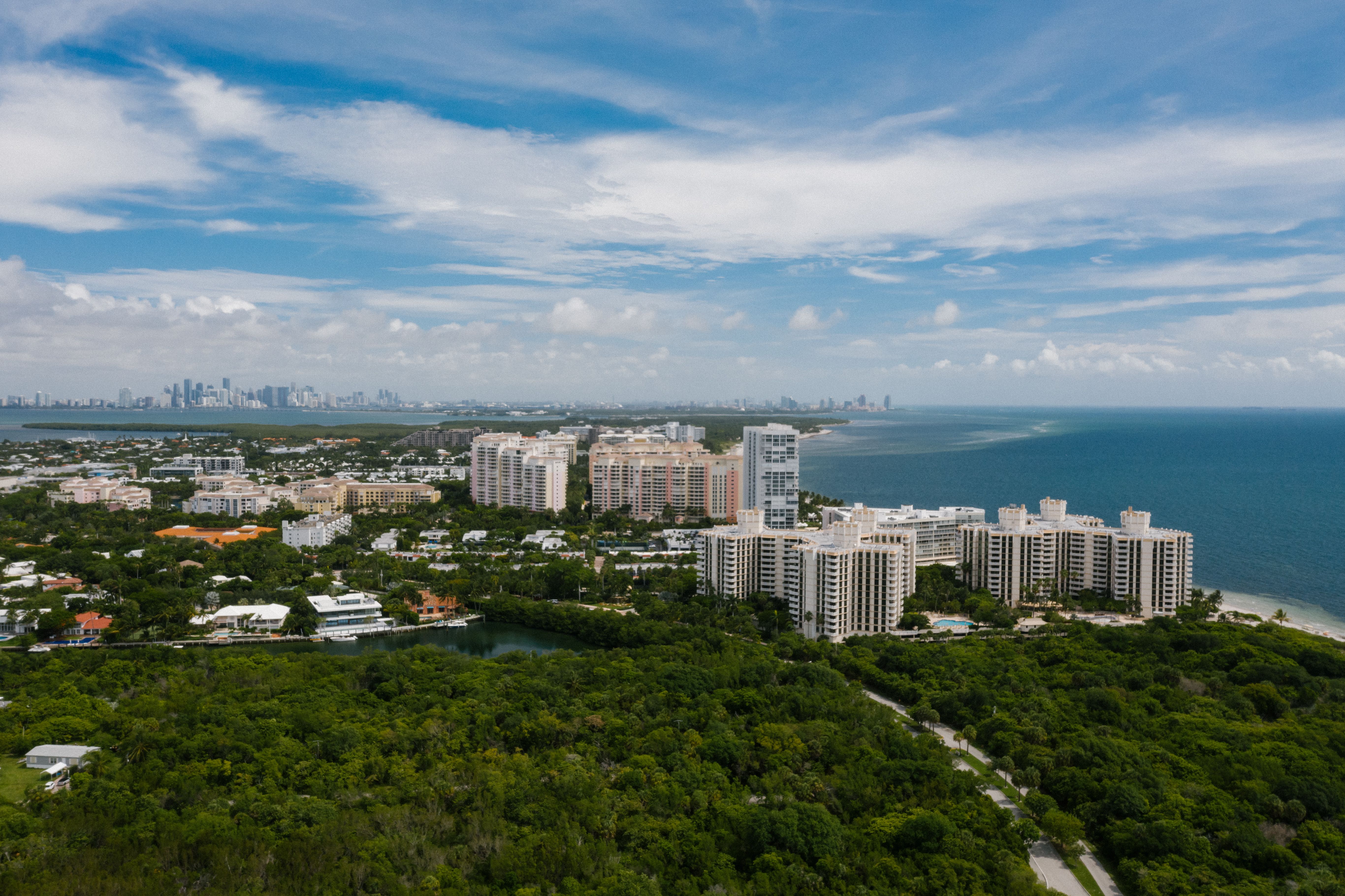
Miami is not one single lifestyle. In 2026, you can choose a high-rise apartment in Brickell, a leafy home in Coconut Grove, a walkable beach lifestyle in Miami Beach, or a more suburban setting in Coral Gables, Pinecrest, or Doral.
The best Miami neighborhood to live in depends on what matters most to you: walkability, beaches, schools, nightlife, space, commute, housing costs, or a quieter residential feel.
If you're buying rather than renting, it's also worth looking beyond the neighborhood name. HOA fees, insurance, flood risk, property taxes, building condition, and commute times can significantly change the true cost of living.
Here are some of the best Miami neighborhoods to consider in 2026—and who each one is best for.
Quick Guide: Best Miami Neighborhoods in 2026
| Neighborhood | Best for | Lifestyle | Housing |
|---|---|---|---|
| Brickell | Urban living & walkability | High-rise, energetic | Mostly condos |
| Coconut Grove | Families & greenery | Relaxed, tropical | Homes + condos |
| Coral Gables | Families & established neighborhoods | Quiet, polished | Homes + condos |
| Miami Beach | Beach lifestyle | Walkable, social | Mostly condos |
| Wynwood | Arts, restaurants & nightlife | Creative, urban | Apartments + condos |
| Little Havana | Culture & value | Lively, local | Apartments + homes |
| Key Biscayne | Beaches & outdoors | Quiet, island living | Homes + condos |
| Pinecrest | Space & privacy | Suburban, leafy | Mostly single-family |
| Downtown Miami | Transit & city living | Urban | Mostly condos |
| Doral | Suburban convenience | Family-oriented | Homes + townhomes |
1. Brickell: Best for Urban Living and Walkability
If you want Miami to feel like a major international city, Brickell is hard to beat.
The neighborhood is dominated by modern residential towers, restaurants, offices, gyms and shopping. The free Metromover connects Brickell with Downtown, while Brickell also has a Metrorail station. Miami-Dade's current transit map shows connections between Brickell, Government Center, Downtown and MiamiCentral.
Best for: Young professionals, frequent travelers, people who want to live without relying heavily on a car.
Pros:
- Excellent urban walkability
- Restaurants, shopping and nightlife nearby
- Strong public transportation
- Large selection of condos
Cons:
- High housing costs
- Dense and busy
- Limited single-family housing
- Condo fees can substantially increase monthly costs
Brickell is also a good example of why comparing individual buildings matters as much as comparing neighborhoods. Before buying, look at reserves, assessments, insurance, HOA fees and building age.
2. Coconut Grove: Best for Families, Greenery and Waterfront Living
Coconut Grove offers a completely different version of Miami.
The neighborhood is known for its mature tree canopy, bayfront setting, marinas, parks and village-like center. It combines a residential atmosphere with restaurants, shops and outdoor activities.
Housing ranges from older cottages and townhomes to luxury condos and large single-family properties.
Best for: Families, buyers who want greenery, outdoor enthusiasts and people looking for a more relaxed alternative to Brickell.
Pros:
- Lush, tropical environment
- Walkable village center
- Waterfront parks and marinas
- Mix of houses and condos
- Central location
Cons:
- Expensive housing in many areas
- Some parts still require a car
- No traditional swimming beach within the neighborhood
Coconut Grove also has access to Miami-Dade transit, including a Metrorail station and trolley connections.
3. Coral Gables: Best for Established Neighborhoods and Families
Coral Gables is one of Miami's most recognizable residential areas, with Mediterranean-inspired architecture, landscaped streets and an established town center around Miracle Mile.
Compared with Brickell and Downtown, Coral Gables generally offers a quieter residential experience. Housing includes single-family homes, townhomes and condos.
Best for: Families, buyers looking for more space, professionals who want a residential environment and people who value architecture and greenery.
Pros:
- Attractive, established streets
- Mix of homes and condos
- Walkable areas around Miracle Mile
- Strong sense of neighborhood identity
- Close to the University of Miami
Cons:
- Can be expensive
- Many daily trips still require a car
- Larger homes can carry significant maintenance and insurance costs
Coral Gables is particularly worth comparing with Coconut Grove because both offer greenery and a more residential lifestyle, but their character is very different.
4. Miami Beach: Best for a True Beach Lifestyle
For buyers who want to walk from home to the beach, Miami Beach is one of the most obvious choices.
South Beach offers the highest-energy version of Miami Beach, with restaurants, nightlife, Art Deco architecture and a highly walkable environment. Mid-Beach and other sections offer a quieter residential experience.
Best for: Beach lovers, people who prioritize walkability, second-home buyers and buyers who want an active social scene.
Pros:
- Immediate beach access
- Walkable in many areas
- Restaurants and nightlife
- Distinctive architecture
- Strong tourism and entertainment scene
Cons:
- Parking can be difficult
- Insurance and condo costs can be substantial
- Tourist activity varies significantly by location
- Building quality and reserves matter enormously when buying a condo
If you're deciding between the beach and mainland Miami, compare the actual lifestyle rather than simply the property price.
5. Wynwood: Best for Arts, Restaurants and Nightlife
Wynwood is one of Miami's most recognizable creative districts.
Its murals, galleries, restaurants, bars and entertainment venues make it attractive to people who want an energetic urban environment. Newer residential development has also expanded the housing options.
Best for: Younger buyers and renters, creatives, entrepreneurs and people who prioritize restaurants, art and nightlife.
Pros:
- Strong arts and culture scene
- Restaurants and nightlife
- Walkable entertainment district
- Close to Downtown and Midtown
Cons:
- Less quiet than residential neighborhoods
- Parking can be challenging
- Housing prices have increased as the area has developed
Wynwood is a good choice if you want to be close to the action, but probably not the first choice if peace and privacy are your priorities.
6. Little Havana: Best for Culture and a More Local Feel
Little Havana is centered around Calle Ocho and is one of the best places to experience Miami's Cuban heritage.
The neighborhood offers restaurants, cafés, bakeries, music and locally owned businesses, with a more traditional Miami atmosphere than the newer high-rise districts.
Best for: Buyers and renters who prioritize culture, food and neighborhood character.
Pros:
- Exceptional Cuban food and culture
- Distinctive local identity
- Central location
- More varied housing options
Cons:
- Housing quality varies significantly
- Less polished than areas such as Coral Gables
- Car ownership is useful for many residents
7. Key Biscayne: Best for Beaches and Outdoor Living
Key Biscayne offers an island lifestyle just south of Miami's urban core.
Residents have access to beaches, parks, cycling and outdoor recreation, while the neighborhood remains relatively quiet compared with South Beach or Brickell.
Best for: Families, outdoor enthusiasts and buyers prioritizing beaches and a quieter environment.
Trade-off: The island lifestyle comes with less convenient access to many mainland destinations, so commute patterns should be considered carefully.
8. Pinecrest: Best for Space and Privacy
If you want a large yard rather than a condo balcony, Pinecrest deserves a place on your shortlist.
The area is known for larger lots, mature landscaping and a suburban atmosphere. It is particularly different from the high-density lifestyle found in Brickell, Downtown or Miami Beach.
Best for: Families, buyers seeking larger homes and people who value privacy and outdoor space.
Trade-off: Pinecrest is substantially more car-dependent than Miami's urban neighborhoods.
9. Downtown Miami: Best for Transit and City Living
Downtown Miami has become increasingly residential, with high-rise buildings, restaurants, cultural institutions and waterfront spaces.
Its biggest advantage is connectivity. The Metromover, Metrorail, Metrobus and Brightline connections around MiamiCentral make Downtown one of the strongest options for people who want access to regional transportation.
Best for: Professionals, frequent travelers and people who want an urban lifestyle without living in Brickell.
Trade-off: The neighborhood can feel more commercial and less residential than Coconut Grove or Coral Gables.
10. Doral: Best for Suburban Convenience
Doral is farther west and offers a more suburban lifestyle than Miami's central neighborhoods.
It has newer residential communities, townhomes and single-family homes, along with convenient access to major roads and Miami International Airport.
Best for: Families, commuters and buyers who prefer newer suburban housing.
Trade-off: Doral is not the place to choose if your priority is walking to the beach, restaurants or nightlife.
What Is the Best Miami Neighborhood for You?
There is no single best neighborhood in Miami. The right choice depends on your priorities.
Choose Brickell if you want walkability, high-rises and an urban lifestyle.
Choose Coconut Grove if you want greenery, waterfront access and a relaxed neighborhood atmosphere.
Choose Coral Gables if you want established residential streets, architecture and more space.
Choose Miami Beach if the beach is central to your lifestyle.
Choose Wynwood if restaurants, art and nightlife matter most.
Choose Little Havana if culture and local character are your priorities.
Choose Key Biscayne if you want an island and outdoor lifestyle.
Choose Pinecrest if you want privacy, larger lots and a suburban environment.
Choose Downtown if transportation and city living are your priorities.
Choose Doral if you prefer newer suburban housing and convenient road access.
Don't Choose a Neighborhood Based on Price Alone
One of the biggest mistakes Miami buyers can make is comparing neighborhoods solely by listing price.
The actual cost of owning a Miami property can also include HOA fees, property taxes, homeowners insurance, flood insurance, maintenance and special assessments.
Flood risk deserves particular attention. Miami-Dade County recommends checking the official flood maps for an individual property, and the county notes that flood risk can vary considerably by location.
You can also verify property information through the Miami-Dade Property Search before making a decision.
And if you're comparing neighborhoods as a potential investment, don't stop at today's asking prices. Look at how values have changed over time.
For buyers specifically considering Brickell, it's also worth evaluating the neighborhood's flood exposure, building condition and day-to-day safety rather than relying on a simple neighborhood-wide label.
Final Verdict
For most buyers, the best Miami neighborhood comes down to lifestyle first and property second.
Brickell is the strongest choice for urban convenience. Coconut Grove and Coral Gables are excellent for buyers seeking a greener, more residential environment. Miami Beach wins for beach access, while Wynwood stands out for culture and nightlife. Pinecrest and Doral make more sense for buyers prioritizing space and suburban living.
Before buying, compare the specific property—not just the ZIP code. Two condos in the same neighborhood can have dramatically different HOA fees, insurance costs, reserves, flood exposure and future assessment risk.
That's where a neighborhood-level comparison can help you turn a long Miami property search into a much shorter shortlist.
Rility provides information for general educational purposes only and does not provide legal, financial, tax, insurance, mortgage, investment, or other professional advice. Market data, property information, estimates, calculators, and other information may change or contain errors and should be independently verified. Property and investment decisions involve risk. Consult qualified professionals before making decisions based on information provided by Rility.
See our full disclaimer